

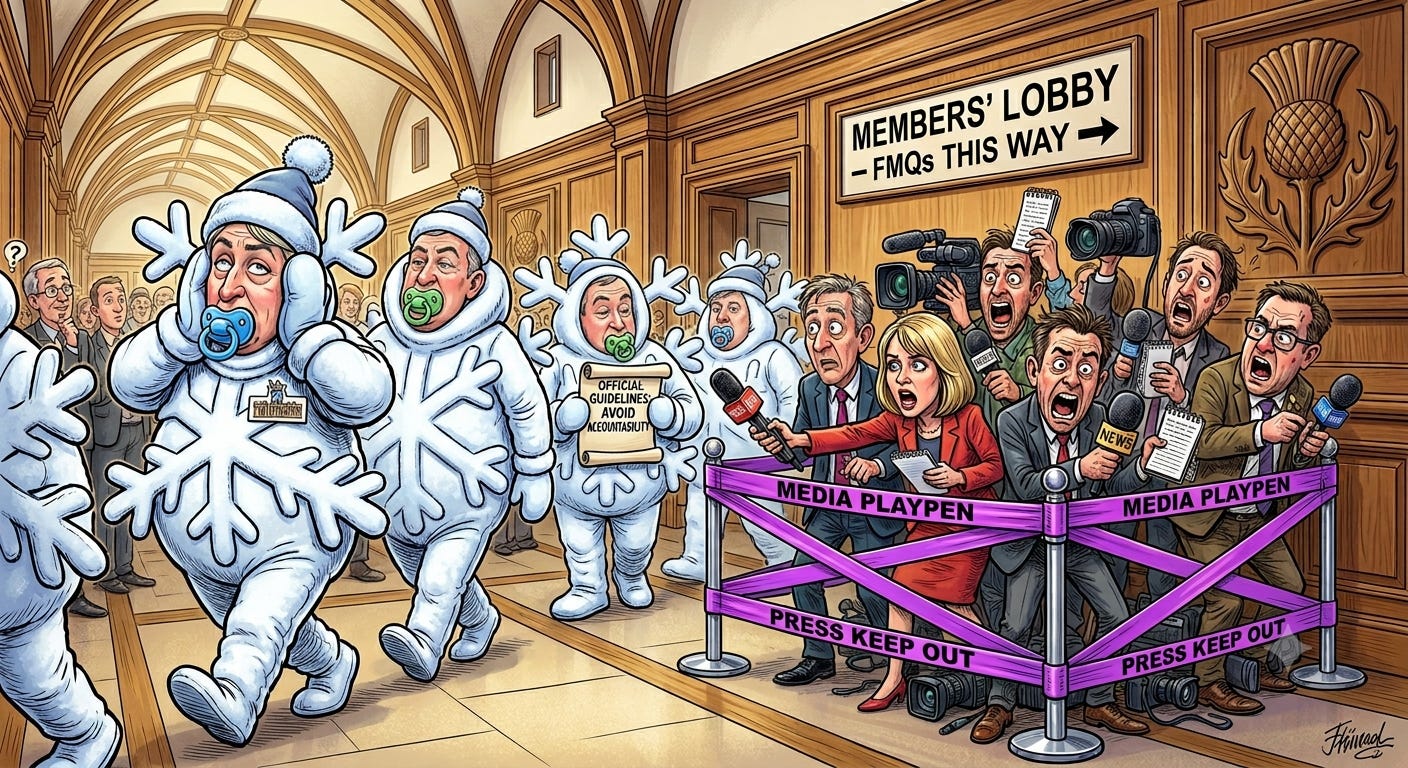
When the Scottish Parliament was founded in 1999, it was built on a proud promise of accountability, sharing power, and access and participation. Fast forward to June 2026, and that progressive veneer didn't just crack; it was cordoned off. In an unprecedented move, parliamentary authorities have erected a literal media playpen—using metal stanchions and purple tape—to corral accredited journalists into a corner of the Members' Lobby. The goal? To stop reporters from doorstepping politicians after First Minister’s Questions (FMQs).
According to Presiding Officer Kenneth Gibson, the sudden isolation of the press is a matter of "workplace safety." In an official letter, parliament bosses claimed that media huddles had become "difficult and, at times, intimidating to walk past" for some MSPs. Let’s be completely clear: these are not random protesters or security threats. These are fully vetted, permanently accredited political correspondents holding government security passes. The idea that elected officials find a microphone and a notebook intimidating is a pathetic indictment of how thin-skinned our modern political class has become.
Shielding the Powerful from Scrutiny
This isn’t about health and safety; it’s about political evasion. As John McLellan, director of Newsbrands Scotland, succinctly put it:
“It should also be obvious that it is not just reporters that politicians are being allowed to dodge, but the readers and viewers they represent.”
McLellan rightly branded the move “staggering” for a supposedly democratic institution.
The trade unions representing the front-line workers were equally scathing. The National Union of Journalists (NUJ) immediately demanded the restrictions be overturned, with NUJ Scotland national organiser Nick McGowan-Lowe pointing directly at the systemic betrayal of Holyrood’s original brief:
“The Scottish Parliament was founded on the principles of openness and accountability, so it is inexplicable that the Presiding Officer has made a decision that restricts legitimate scrutiny.”
The Scottish Parliamentary Journalists' Association (SPJA) confirmed they were left completely in the dark, warning that the move fundamentally guts Holyrood's open culture:
"It creates a physical and symbolic barrier between elected representatives and those tasked with holding them to account."
The Normal Is Defiance
The immediate reality of the cage exposed its true purpose. On the very day it was erected, journalists attempted to question Presiding Officer Kenneth Gibson from inside the designated pen, but he flatly refused to stop and walked on by:

The political class lost no time in justifying their new barricade. First Minister John Swinney completely washed his hands of the scandal, hiding behind a wall of bureaucratic separation by claiming it would be “dangerous” for him as head of government to intervene in a parliamentary management decision:

It is a spectacular act of political cowardice from a leader who is more than happy to enjoy the privileges of power, but suddenly finds it dangerous to defend the basic mechanics of a free press.
But if Swinney was evasive, the Scottish Greens were openly hostile. As he breezed past the empty media corral, Green MSP Ross Greer couldn’t resist throwing a snide, lecturing swipe at the journalists holding the line, snapping:
“Have a word with some of your colleagues about their behavior.”
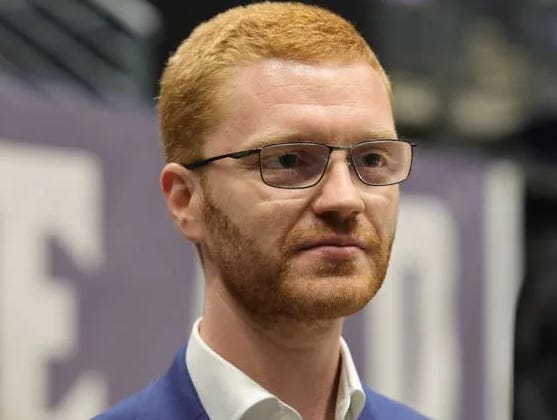
There it is in one sentence: the sheer, modern authoritarian arrogance of a politician who views legitimate, hard-hitting journalism not as a pillar of democracy, but as a disciplinary issue.
But if parliament bosses and their protective pack expected the press corps to behave like compliant toddlers, they severely miscalculated. In a rare and powerful show of solidarity, Scotland’s major newspaper editors issued a directive to their teams: ignore the pen completely.
Journalists staged an open mutiny, standing in their traditional spots across the lobby floor, while opposition leaders like the Scottish Tories’ Russell Findlay actively joined the rebellion. The SNP and Green leadership may be content to hide behind bureaucratic compliance and petulant lectures, but the press gallery has proven that accountability is mandatory, not granted.
Holyrood wanted to quarantine the press to protect its snowflakes. Instead, it has transformed the Scottish Parliament and its brats into a national and global laughingstock.
