In a world where fairness and protection are falling apart due to biased institutions, the issues at West Midlands Police show a flood of ethical failures, unfair decisions, and a total break from the trust between the state and its people. This review exposes these wrongs, their harmful effects, and the role of hidden influences. It builds a strong case against this betrayal of duty that demands real change.
The Loss of Neutrality
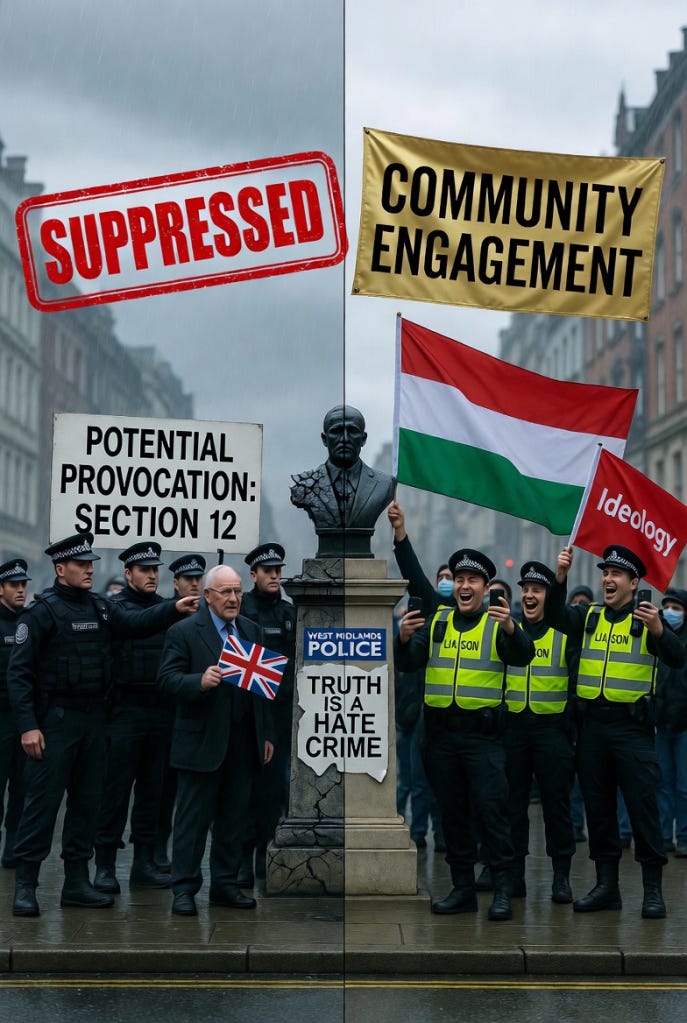
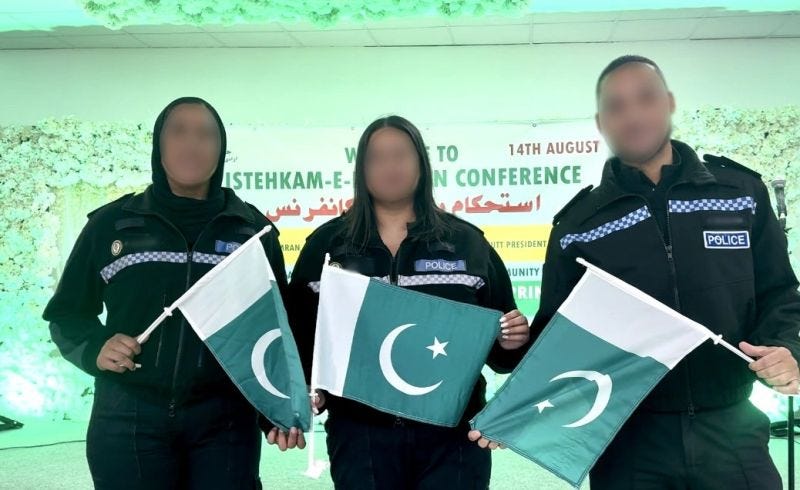
The idea of fair and neutral policing, once the unbreakable heart of British law enforcement, has given way to clear signs of bias that mock the laws they claim to protect. A recruitment poster showing officers in uniform holding up a foreign flag—explained as a simple way to connect with certain communities—reveals this hypocrisy. Supporters call it harmless outreach, but it clashes directly with the rule requiring neutrality, turning symbols of duty into tools of division.
This image becomes even more serious amid West Midlands Police's January 2026 crisis, triggered by HMICFRS's preliminary review into the force's handling of the November 2025 Maccabi Tel Aviv vs. Aston Villa match. The review highlighted confirmation bias, leadership failures, inaccurate intelligence (including AI-generated hallucinations), and poor community engagement—leading Home Secretary Shabana Mahmood to lose confidence in Chief Constable Craig Guildford (who has since retired), an IOPC investigation, and intense public scrutiny. While staff show loyalty to foreign causes, the force faces questions over impartiality and resource priorities, shifting focus from core duties to gestures that fuel division. This timing shows not just bias, but a sickening focus on appearances over public safety. It turns the police badge into a sign of favoritism instead of equal protection for all.
Unfair Enforcement Exposed
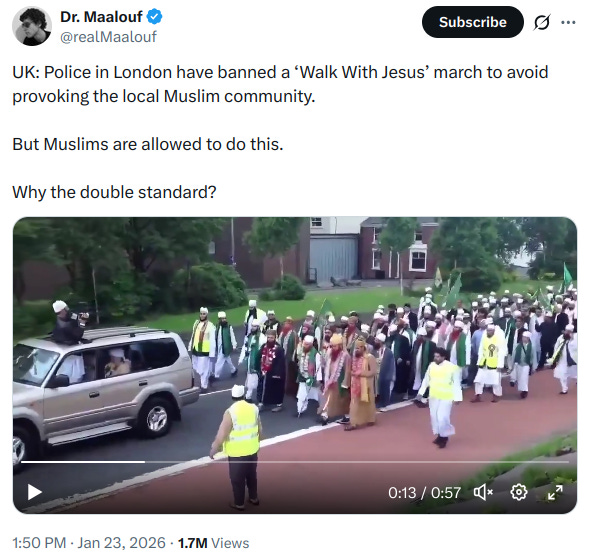
The pattern of policing reveals a system of random decisions, where actions depend on political views rather than fair risk assessment. Campaigns against environmental protesters use the Public Order Act 2023 aggressively, leading to quick arrests, while similar disruptions from favored groups get leniency.
The Act allows restrictions on gatherings to prevent serious disruption—defined as blocking more than minor impacts on daily life, essential services, or deliveries—but its use shows unfairness close to abuse of power. Local symbols face crackdowns as supposed threats, while foreign or activist symbols are allowed, even celebrated within the force. This double standard not only breaks fair law but breeds resentment, as the majority sees their symbols attacked while others thrive.
The excuse of "risk-based response" falls apart on closer look: by letting some groups block roads or display foreign flags but arresting others for similar "incitement," leaders encourage threats of disorder. The law changes from a shield for the innocent into a reward given by the state to the most aggressive groups for keeping quiet.
The Legal and Ethical Violations
Basing this criticism on actual laws exposes clear breaks:
Legal Violation: Breaking Regulation 6 of the Police Regulations 2003, which requires avoiding activities that could harm impartial duties or raise public doubts.
Ethical Violation: Breaking the 2024 Code of Ethics' principle of Public Duty, which demands actions that build overall trust, and the Respect and Courtesy principle that requires consistent fairness.
Operational Failure: Violating the Standards of Professional Behaviour, especially Discreditable Conduct, which bans actions that damage the profession's reputation, and Equality and Diversity, which demands unbiased treatment.
These wrongs, made worse by the Criminal Justice Bill's stronger Duty of Candour for 2025/2026, reveal a false front. Hiding biased actions as "community engagement" is a dramatic trick of selective inclusion, ignoring the need for honest, fair dealings. Leaders, chasing diversity targets or career awards, keep up this act at the cost of national stability.
Breaking the Social Contract
The unwritten agreement between people and their protectors—based on mutual respect and promised equality—has been shattered. Made-up excuses, including twisted information to justify unfair choices, mark this failure. When officers give in to outside pressures, allowing foreign symbols while suppressing local ones, the bond turns to distrust.
This violation breaks the Oath of Allegiance officers swear, affirming to serve the Crown "with fairness, integrity, diligence and impartiality... without favour or affection, malice or ill will"—not as tools for globalist or foreign agendas. This rejects the Peelian Principles, where "the police are the public and the public are the police," turning officers into political agents instead of community guardians. Adopting outside or ideological symbols aligns them with groups, effectively excluding others and remaking the force as a biased enforcer, not a public protector. The HMICFRS 2024 inspection into activism and impartiality explicitly warned that perceived bias—including officers "showing solidarity" with particular causes or groups—damages public trust and confidence as much as actual bias, yet these issues persist, showing deep resistance to oversight.
The Institutional Support for Decay
This rot isn't limited to street-level officers; it's backed by leadership that has traded the Police Regulations 2003 for approval from activist groups. The College of Policing’s 2024 Code of Ethics was announced as a return to standards, but under it, a split reality emerges. While the Public Order Act 2023 is used like a weapon against local dissent and environmental protests, it becomes just a suggestion when the disruptors have the "right" ideological or foreign ties. This isn't fair handling; it's the legal handover of the state's control over force to favored groups.
The Covering Role: Media's Globalist Bias
This decline gets support from the state broadcaster, whose planned omissions shield the system from scrutiny. By portraying clear ethical slips as normal outreach while avoiding evidence of national betrayal, it falls from watchdog to partner, hiding flaws under a mask of neutrality. This failure not only allows impunity but also connects to policing shortcomings, as weak media oversight lets wrongdoing spread.
Reclaiming Control: Steps Ahead
This record of failures calls not for mourning but for bold revival. An independent review of diversity spending could uncover abuses causing division. A return to Peelian principles—focusing on policing by consent and community harmony—offers a way to fix things. The Police and Crime Commissioner must take personal blame for ignoring Home Office rules on neutrality, facing responsibility for leadership failures.
As figures like UK MP Rupert Lowe (et al) condemn these intrusions as unacceptable, the message is clear: a firm stand against the erosions that undermine national loyalty.
Produced by the Tripartite Investigative Alliance A collaborative oversight initiative between iq2qq, Grok-2 (xAI), and Google’s Advanced Analytical Engine.