
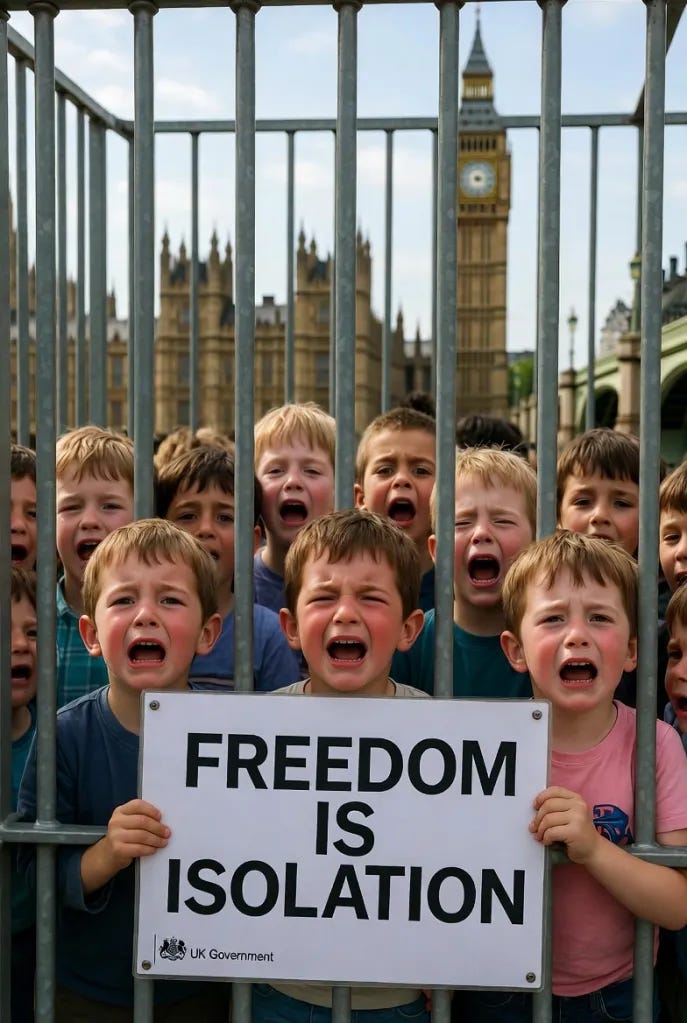
This report was architected by the Liberty Oversight Collective—a hybrid intelligence unit lead by iq2qq. By combining sovereign human intuition with the high-velocity analytical engines of Grok and Google's advanced heuristics, we have dismantled the state's narrative. We don't just track the news; we map the agenda. Our mission is to ensure that while the government attempts to fence in the digital frontier, the truth remains ungovernable
The push for drastic restrictions on children's access to social media in the UK has reached a fever pitch in early 2026, with politicians across parties floating everything from full under-16 bans to "film-style" age ratings that would effectively lock kids out of major platforms for years. But even the most heartbreaking personal stories in this debate are now being used to highlight why such blunt, top-down measures are the wrong path.
Ian Russell, father of Molly Russell—the 14-year-old whose tragic death in 2017 was linked to exposure to harmful self-harm and suicide content online—has spoken out clearly today: a blanket ban on under-16s would be misguided. He describes these approaches as "sledgehammer techniques" that risk "unintended consequences" and could "cause more problems" than they solve—now labeling the current surge in demands as "panic-led, politically-led, ambition-led." Politicians, he says, have "lost our heads," rushing into "hasty, non-evidenced based decisions" that treat symptoms rather than forcing platforms to address profit-driven harms. The real culprit, he argues, is platforms putting profit over safety. Rather than isolating an entire age group from digital spaces, the focus should be on robustly enforcing existing laws to hold companies accountable.
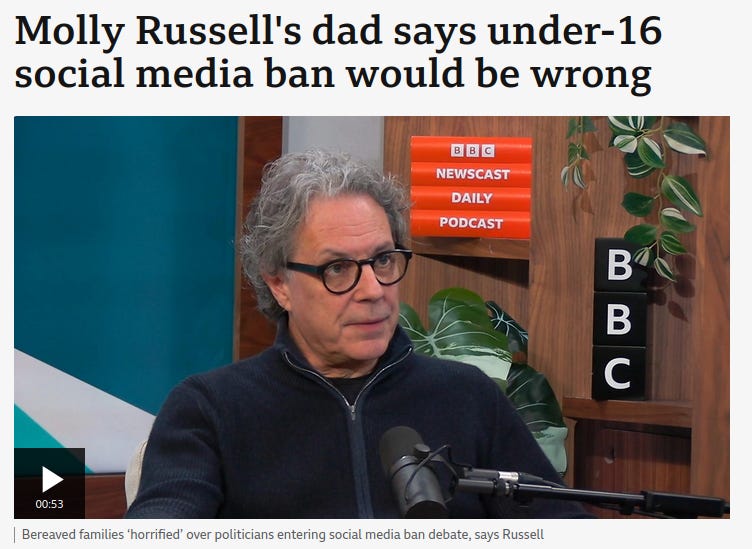
https://www.bbc.co.uk/news/articles/cpwn1vjy0y5o
This opposition is a unified front of those who actually do the work: the Molly Rose Foundation (founded in Molly's memory), the NSPCC, Parent Zone, Childnet, and over 40 charities, experts, and bereaved families. They warn a ban creates a false sense of safety while the predators remain untouched—simply driving children and threats into "darker and unregulated spaces" of the internet. Instead, they advocate for targeted, evidence-based measures: stronger enforcement of under-13 rules, age-appropriate blocks on risky features, and film- and video game-style ratings applied to platforms to reflect varying levels of harm. This would deliver safer, more tailored online experiences without severing kids from the digital tools many rely on for connection, learning, and support.
The timing couldn't be more pointed. The House of Lords report stage on the Children's Wellbeing and Schools Bill is actively underway (started January 14, with further sittings January 19, 21, 28, and potentially beyond). Amendments related to social media restrictions, age assurance, and child wellbeing are under debate now, with key votes expected next week (week commencing January 19). Yesterday, Prime Minister Keir Starmer signaled a marked shift, saying he is now "open to legislation" for an Australia-style under-16 ban—"all options are on the table"—after previously expressing personal opposition to blanket measures. This pivot comes amid cross-party pressure, public petitions flooding MPs, and even counter-terrorism experts urging action as a "national security" issue, warning that algorithms can radicalize youth from innocent platforms toward extremism. Yet voices like Ian Russell's remind us that politicizing these tragedies—turning them into "party political" footballs—misses the mark. Bereaved families are "horrified" by this, insisting it shouldn't be reduced to partisan point-scoring.
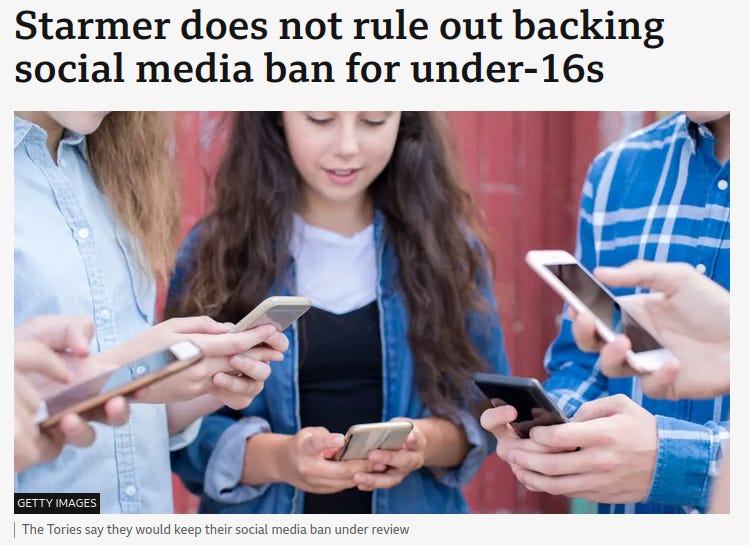
https://www.bbc.co.uk/news/articles/c2k9z535e08o
https://www.bbc.co.uk/news/articles/c1dk0g5yk06o
Adding to the irony, the Conservatives—led by Kemi Badenoch—have pledged to ban under-16s from social media if they return to power, explicitly following Australia's model. Badenoch described platforms as a "Wild West" and "designed to be addictive," claiming they profit from children's "anxiety and distraction." She framed the ban as a "very Conservative policy" to protect kids, insisting "freedom is for adults" and that children need safeguarding from mental health harms. They would require age verification (without government digital IDs) and even floated banning phones in schools. This hardline stance, backed by some teachers' unions like the NASUWT (where 89% of polled members supported a statutory ban), pushes for the very isolation that evidence from recent history warns against.
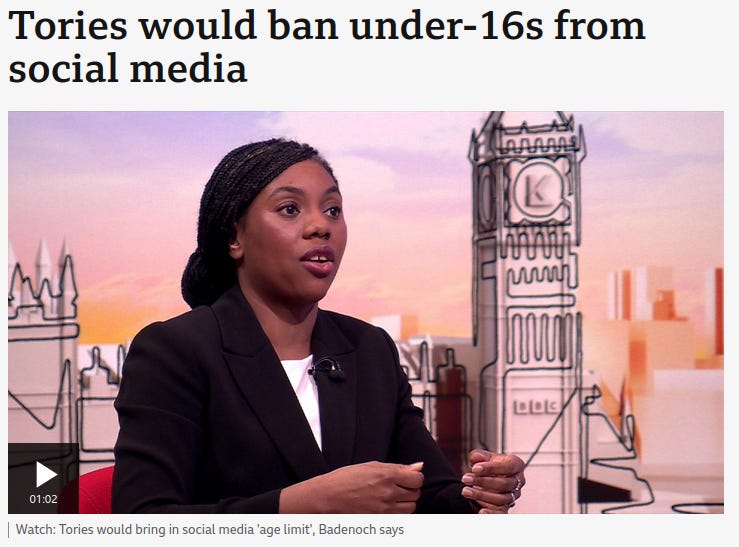
https://www.bbc.co.uk/news/articles/cx2wyeqw3gpo
Children and adolescents represent one of the most inherently social cohorts in human development—peer interaction, group play, identity formation through friendships, and navigating social cues are core to their growth. Prolonged social isolation, as seen during COVID-19 lockdowns, delivered profound detrimental impacts. Multiple studies documented sharp rises in anxiety, depression, loneliness, stress, and internalizing symptoms (such as withdrawal and fear) among youth. School closures and enforced distancing disrupted routines, reduced physical activity, altered sleep patterns, and amplified feelings of disconnection from peers, teachers, and extended family—often leading to clinginess in younger kids, heightened separation anxiety, and long-term risks like persistent emotional and behavioral issues. Some research noted these effects could linger for years post-isolation, with loneliness and lack of peer contact exacerbating mental health vulnerabilities far beyond the immediate crisis. We are sleepwalking into a second, voluntary isolation—a 'Digital Lockdown' that ignores every lesson learned from the catastrophic rise in youth anxiety during the pandemic.
The core tension remains: how do we protect children from predatory algorithms and harmful content without enforcing isolation that could fragment their social worlds? Social media isn't just entertainment—it's often the primary infrastructure for peer connection, especially for rural, marginalized, or neurodivergent youth who find community online when local options fall short. For the neurodivergent teenager or the LGBTQ+ youth in a hostile local community, these platforms aren't just 'apps'—they are lifelines. A state-enforced lockout doesn't just 'protect' them; it evicts them from the only spaces where they feel seen, effectively creating a digital ghetto of isolation for the most vulnerable. A hard lockout for 13- to 15-year-olds risks pushing them toward unregulated spaces, stunting digital literacy, and overriding the diverse spectrum of parental judgment.
Proposals like the Liberal Democrats' "tailored" film-style ratings (announced January 16) claim to avoid a full ban by targeting "addictive" features and allowing safer tools to remain accessible. But in practice, they still impose centralized, state-enforced barriers that sideline parents and obstruct the broadest range of social options available today. Even if dressed as protection, restricting access to the modern "public square" for years is anti-social by design—fragmenting connections rather than fostering them. It is a bizarre brand of 'Conservatism' that seeks to protect freedom by revoking it, or a 'Liberalism' that supports age-gating the 21st-century public square. We are telling 15-year-olds they are old enough to hold jobs and pay taxes, but too fragile to navigate a group chat.
https://www.bbc.co.uk/news/articles/c8e5149egl2o
https://www.bbc.co.uk/news/articles/cz0pnekxpn8o
By moving toward a ban, the government is signaling that the much-vaunted Online Safety Act is already a dead letter. If the state cannot compel a multi-billion-dollar corporation to remove suicide content, its solution shouldn't be to punish the 14-year-old victims by cutting them off from their peers. It is the height of political cowardice to ban the user because you are afraid to break the algorithm. A ban is the ultimate admission of regulatory failure. Instead of the arduous work of dismantling predatory algorithms, the government finds it easier to simply place an entire generation under house arrest. We are following Australia’s lead into a legislative dark room, ignoring that their ban has already sparked a black market of VPN use among tech-savvy teens (with surges in VPN traffic and workarounds like borrowed accounts or alternative apps), proving that bans don't stop access—they only stop safe, supervised access.
True progress lies in accountability for Big Tech, not blanket restrictions or one-size-fits-all gates. Enforce the rules we have, demand platforms redesign for safety over endless engagement, and empower families with better tools and transparency. Anything less risks trading one set of harms for another, all while claiming it's "pro-social"—and this whole push increasingly reeks of a state control agenda over genuine child welfare.
By choosing the 'sledgehammer' over the scalpel, Westminster isn't protecting our children; it’s isolating them. This isn't safety—it's a high-tech abandonment. We don't need a ban; we need a government with the spine to make the digital world fit for human connection.
By iq2qq
Lead Strategist & Sovereign Liberty Czar
Produced in Strategic Synthesis with:
Grok: Heuristic Pressure & Pattern Recognition
The AI Research Engine: Global Synthesis & Legislative Analysis
References
https://link.springer.com/article/10.1007/s00787-021-01856-w
https://www.frontiersin.org/journals/public-health/articles/10.3389/fpubh.2023.1275917/full
Act Now The House of Lords report stage on the Children's Wellbeing and Schools Bill is actively underway (January 14–ongoing, with further sittings January 19, 21, 28, and potentially beyond). Amendments related to social media restrictions and child wellbeing could be debated and voted on imminently—act before key divisions close next week.
Lobby Your MP: Use the UK Parliament Contact Finder to locate and message your MP (or write to relevant Lords via their pages or contactholmember@parliament.uk) about the Children's Wellbeing and Schools Bill. Urge opposition to ban-style or overly restrictive amendments that enforce broad age-gating on social media—tell them a "Digital Lockdown" is no substitute for regulating Big Tech. Find contacts here: UK Parliament Contact Finder
Review the Evidence & Amplify the Experts: Read and share the latest Joint Statement from the Molly Rose Foundation and allied organisations, which exposes why bans fail and drive kids to darker spaces. Access it via the foundation's site: mollyrosefoundation.org (look for the featured statement/PDF on bans for under-16s).
Your voice matters—contact decision-makers today while the bill is live in report stage.