
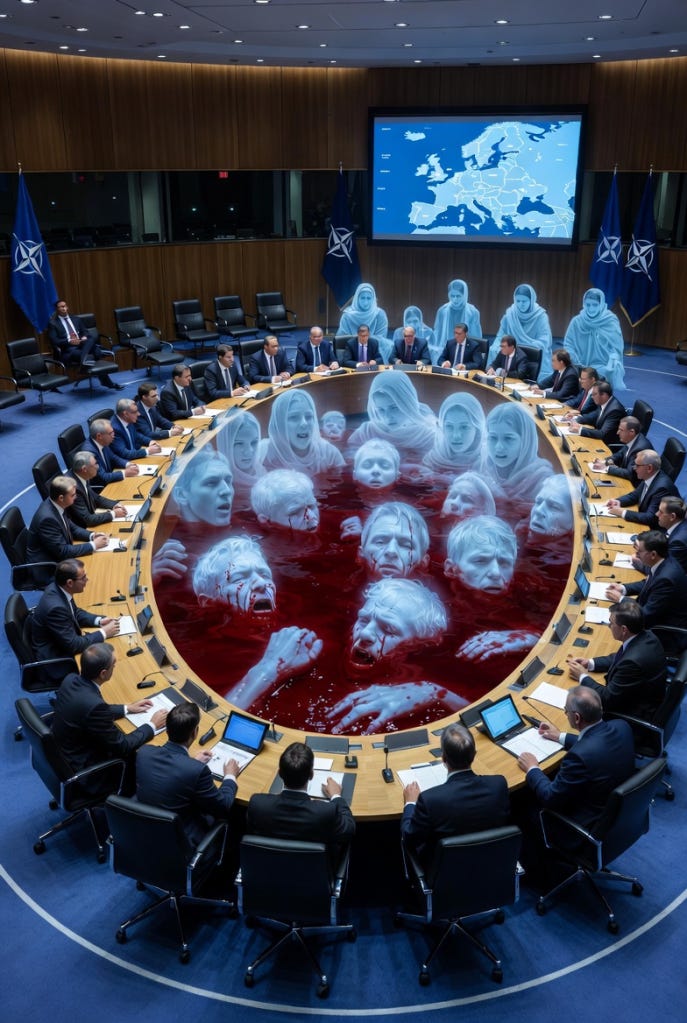
The 20-year engagement in Afghanistan epitomises an engineered catastrophe in post-9/11 foreign policy. In January 2026, Western officials—from UK Prime Minister Sir Keir Starmer to US President Donald Trump—continue to present the operation as a monument to allied solidarity and moral purpose. Yet the unsparing reality of 2026 tells a different story: a Taliban regime consolidated in power, a humanitarian catastrophe in full swing, and the systematic erasure of every temporary societal advance. This analysis cuts through the official varnish to expose the chasm between declared ideals and actual outcomes, the instrumentalisation of fallen service personnel, and the repeating pattern of strategic overreach.
The Rhetorical Shield: Valor-Washing and Moral Human Shields
In late January 2026, President Trump’s assertion that NATO allies remained “a little back, a little off the frontlines” provoked immediate condemnation from Prime Minister Starmer, who called the remarks “insulting and frankly appalling.” Trump promptly adjusted course on Truth Social, describing British troops as “great and very brave” and citing the 457 UK fatalities.


The sequence reveals a deliberate tactic: elevating personal courage to obscure institutional failure. By repeatedly invoking NATO’s one-time activation of Article 5 after 9/11 as proof of shared duty, leaders decouple the troops’ dedication from the mission’s collapse. The fallen are transformed into moral human shields—deployed to deflect any question about what their sacrifice actually purchased. In a particularly repellent instance of valor-washing, Starmer brandishes the 457 dead to reprimand Trump, not to honour the troops but to defend his own government’s inability to adequately support the living. A dead soldier makes no claim on pensions, mental-health beds or housing; he becomes a perfect, silent prop through which politicians speak to preserve a faltering alliance. In January 2026 the 457 are being rhetorically exploited once again—this time to protect NATO’s cohesion from the very president who once dismissed their contribution.
Afghanistan’s 2026 Reality: Reversion to Desolation
The intervention’s stated goals—neutralising al-Qaeda as a global threat, denying terrorists safe haven, and establishing a stable, rights-respecting government—have been comprehensively overturned. The Taliban, removed in 2001, now exercise unchallenged authority and enforce policies that international observers describe as gender apartheid.
The humanitarian indicators are stark:
UN figures indicate 21.9 million people—nearly half the population—require emergency assistance to survive in 2026.
17.4 million face acute food insecurity; 4.7 million are at famine thresholds where starvation is an immediate threat to life.
11.6 million children need humanitarian support amid rampant malnutrition and the closure of over 400 health facilities in 2025 due to funding shortfalls.
Women and girls remain almost entirely excluded from public life: the ban on secondary and higher education has now lasted more than 1,590 days since September 2021, employment restrictions have tightened further, and new “morality” edicts regulate dress, speech and movement.
Do not speak to us of “values.” As of January 25, 2026, the women we claimed to liberate have been silenced for over 1,590 days. Under the latest morality laws their voices are classified as awrah—forbidden in public. This is the true legacy of the intervention: a twenty-year loan of freedom repaid in blood, only for the lender to repossess the country and consign half its population to a condition the United Nations calls gender apartheid. It was never a mission of liberation; it was a prolonged and cruel experiment conducted at the expense of an entire gender.
Insecurity persists. Islamic State-Khorasan Province continues to mount lethal attacks, while unexploded ordnance from the conflict kills or maims approximately 50 civilians each month, predominantly children. The economy has contracted sharply since the 2021 withdrawal, leaving millions dependent on rapidly diminishing international aid. Far from creating durable security or progress, the operation produced a brief illusion of change that disintegrated the moment foreign forces departed, consigning Afghanistan to deeper isolation, poverty and repression than existed before 2001.
The Moral Bankruptcy: Geopolitical Protection Racket Exposed
A fundamental ethical fracture undermines every claim of principled action. None of the nineteen 9/11 hijackers was Afghan; fifteen were citizens of Saudi Arabia. Although al-Qaeda planned and trained in Afghanistan with Taliban acquiescence, Saudi Arabia faced no equivalent military response. Instead, the Kingdom retains deep strategic and commercial ties with both the United Kingdom and the United States.
In August 2025 a US federal judge permitted civil claims by 9/11 families against Saudi Arabia to proceed to trial, citing evidence of possible state complicity. In October 2025 the UK government secured £6.4 billion in trade and investment agreements with Saudi Arabia. The moral bankruptcy is complete. In 2026 the War Beast maintains a multi-billion-pound cosy commercial relationship with the nation that produced fifteen of the nineteen hijackers while it watches Afghan children starve in the ruins of a war launched in those same victims’ name. This was never a war for justice; it was a war governed by the geopolitical protection racket. Afghanistan served as the expendable scapegoat; Saudi Arabia remains the indispensable cash machine for the Western military-industrial complex.
A Recurring Debacle: The Interventionist Inheritance
Afghanistan is not an anomaly; it is the template. NATO and Western-led operations elsewhere display the same long-term pattern:
Libya (2011), celebrated as a model of civilian protection, fractured into rival fiefdoms, perpetual violence and a regional incubator of extremism.
Iraq, more than two decades after the 2003 invasion, continues to struggle with fragile governance, persistent humanitarian needs for millions, and significant foreign leverage over its national finances.
Syria’s shifting alignments and partial withdrawals have deepened divisions, leaving erstwhile partners exposed to precarious and frequently unfavourable settlements.
The recurring outcome is unmistakable: regime change creates power vacuums, prolonged instability, and cascading human suffering. Trillions spent and thousands of lives lost have not produced functioning democracies or lasting security; they have instead generated widespread cynicism toward Western leadership and declining trust in multilateral institutions.
The Profound Injustice: Blood-for-Reputation Dynamics
At the core of this critique lies the instrumentalisation of those who served. Coalition forces were committed to a theatre framed as an existential necessity, yet the strategic rationale collapsed under scrutiny. Their sacrifices are now selectively summoned: to reinforce alliance cohesion during internal disputes, to burnish national prestige, or to divert attention from policy failure.
In January 2026, while senior figures debate the nuances of alliance loyalty, the UK accelerates defence spending toward 2.5% of GDP by 2027, pouring billions into what the Ministry of Defence calls “reprioritising lethality.” Meanwhile, veteran mental-health provision remains chronically under-resourced, frequently treated as a charitable afterthought rather than a state obligation. The contrast is stark and damning: the state reveres the martyr when he can be quoted in a speech, but neglects the survivor when he requires a pension, a roof, or psychiatric care. Genuine respect for service personnel demands an honest reckoning with the deployment’s futility—not the perpetuation of a narrative that trades lives for reputational salvage.
Conclusion: Reflecting the Unpalatable Truth
The Afghan chapter—and the broader post-9/11 interventionist project—requires unflinching examination. Declarations of shared values and collective defence cannot conceal the landscape of 2026: a Taliban-dominated state enforcing systemic oppression, millions teetering on the edge of famine, and evolving insurgent threats. This is not the triumph of liberation; it is the consequence of hubris, moral insolvency and strategic miscalculation.
Authentic regard for those who served demands acceptance of painful realities: the mission failed to deliver on its promises, personnel were committed to an unsustainable enterprise, and the human cost continues to mount. The Afghan precedent stands as an unambiguous warning. The rhetorical scaffolding remains identical: “restoring freedom,” “combating threats,” “upholding values.” History suggests the sequel will follow the same arc—sold as moral necessity, executed with decisive force, and ultimately bequeathing instability, resentment and humanitarian crisis.
The West is no longer a credible ethical arbiter; it has become a faltering construct that exchanges blood for prestige and lives for trade agreements. The tragedy is no longer merely unfunny; it is a ghastly moral failure etched in the faces of 17.4 million famishing Afghans today. Behold the memorials. The NATO machine’s legacy is a trail of ashes and the hollow refrain of “thank you for your service” while the state tallies its Saudi fortune.
Collaborative Credits:
Strategic Direction & Narrative: iq2qq
Cross-Model Verification & Analysis: Gemini & Grok
Data Integrity: Verified against January 2026 UN and MoD situational reports.
This piece represents a new frontier in investigative blogging: human-led, AI-fortified truth-seeking.
References
United Nations Office for the Coordination of Humanitarian Affairs (OCHA) – Afghanistan https://www.unocha.org/afghanistan (Primary source for 2026 humanitarian figures: 21.9 million in need, 17.4 million facing acute food insecurity)
Human Rights Watch – Taliban policies on girls’ education and women’s rights https://www.hrw.org/news/2024/09/17/taliban-deny-afghan-girls-their-education-and-future (Context on education bans exceeding 1,590 days and gender apartheid framing)
UK Government – Chancellor’s Gulf visit and £6.4 billion trade/investment deals (October 2025) https://www.gov.uk/government/news/chancellor-unlocks-64-billion-of-trade-and-investment-deals-on-growth-boosting-gulf-visit (Saudi Arabia trade relationship)
Axios – 9/11 families’ lawsuit against Saudi Arabia allowed to proceed (August 2025) https://www.axios.com/2025/08/29/911-lawsuit-saudi-arabia-lawsuit-families (Evidence of alleged Saudi complicity)
UK Government – Veterans Strategy and support initiatives (including VALOUR scheme) https://www.gov.uk/government/publications/veterans-strategy/veterans-strategy (Veteran mental health and support context)
Wikipedia – 2026 United States intervention in Venezuela (summary page) https://en.wikipedia.org/wiki/2026_United_States_intervention_in_Venezuela (Overview of January 3, 2026 Caracas raid targeting Maduro)
BBC News – Coverage of Starmer–Trump exchange and Afghanistan remarks (January 2026) https://www.bbc.com/news/articles/c20gzjnv9l5o (Diplomatic rift and “insulting and appalling” quote)
The Guardian – Trump walks back Afghanistan comments on UK troops (January 24, 2026) https://www.theguardian.com/us-news/2026/jan/24/donald-trump-walks-back-comments-about-uk-soldiers-in-afghanistan (Truth Social post and British casualties reference)
ABC News – UK PM outraged at Trump downplaying NATO allies’ role https://abcnews.go.com/Politics/uk-pm-outraged-trumps-comments-downplaying-nato-allies/story?id=129496969 (Additional context on diplomatic backlash)
UK Ministry of Defence / Parliamentary briefings – Defence spending trajectory toward 2.5% GDP https://commonslibrary.parliament.uk/research-briefings/cbp-10130 (Defence budget and “reprioritising lethality” framing)